Sasha Stiles
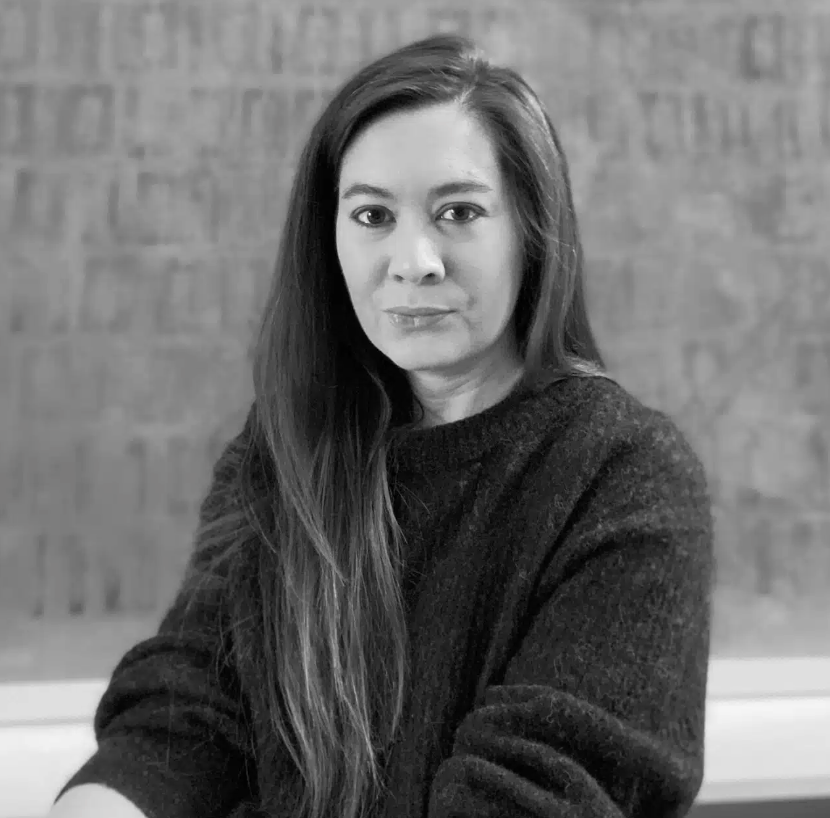
Image Credit: from artist
About the Artist:
Sasha Stiles is a first-generation Kalmyk-American poet and language artist whose work explores what it means to be human in an increasingly more-than-human world. Working across poetry, art, and emerging technology, she reimagines language as both an ancient technology and a living computational medium. Her practice explores the evolving relationship between human and machine intelligence, advancing what she calls “poetic intelligence,” the synthesis of emotion and algorithm, as a framework for thinking, creating, and making meaning in the generative age.
The Interview
Paloma: Your background is deeply rooted in literature and language, including your studies at Harvard University and Oxford. How did these academic experiences shape your understanding of language as both a creative medium and a tool for exploring human experience?
Sasha: I think I was born with a love of language – books, poems, literature. I grew up devouring stories and trying to write my own from the time I was little. As a kid, I hand-crafted miniature books for my parents to take on work trips. All I ever wanted to do was write and make books and play with words. It’s still the thing that gives me pleasure and puts me into a flow state like nothing else. I can sit down at my computer to edit a poem and lose myself for hours.
When I went to Harvard, I couldn’t imagine studying anything except literature and language. And I specifically went to Oxford to indulge myself even further, especially in my love of James Joyce and modernist literature. I actually thought I might become a professor, but that’s where I was wrong. I just really wanted to be in an environment where I could stuff my brain as full as I possibly could with great world literature. I wanted to develop my own voice not through creative writing classes, which I’ve never felt quite at home in, but by reading.

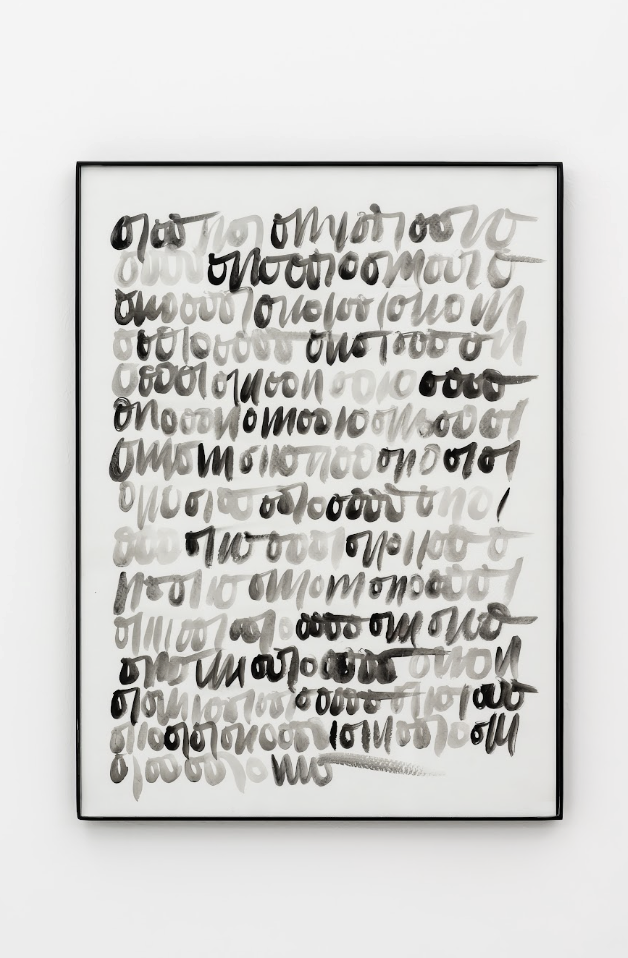
Installation view at Anna Kultys Gallery London
P: Before becoming widely recognized for your work at the intersection of poetry, artificial intelligence, and technology, what drew you to writing and poetry in the first place? What did you study specifically and how did you get interested in exploring technology at the intersection of your academic background?
S: I’ve always had pretty eclectic, far-flung interests. My parents make science documentaries, so I grew up reading a lot of science fiction and nonfiction – like Carl Sagan’s Cosmos; my parents worked with Sagan. At the same time, I was the kid who was incredibly excited to take Latin and translate Catullus, Cicero, Virgil. Later, I interned in book publishing, including with Nan Talese, whose authors included writers like Ian McEwan and Margaret Atwood. And I was also obsessed with text-based art, especially artists like Jenny Holzer and Bruce Nauman, who, perhaps not coincidentally, were experimenting not only with words but with media and technology.
But I think my work has a lot to do with when I was born. I’m part of that Xennial generation that had a very analog childhood and then consciously experienced the arrival of the personal computer, the internet, social media… I remember writing broody poems about what it felt like to send love notes over AOL Instant Messenger. And when I was at Oxford, I remember lying in bed thinking about how strange and incredible it was that I could communicate with my family and friends back home through cables running under the ocean.
I was preoccupied by technology back then, and still am. I’ve seen a lot of artists pivot toward digital tools and AI over the last five or six years, but for me, technology isn’t a recent turn. It’s the roots and foundation of who I am.
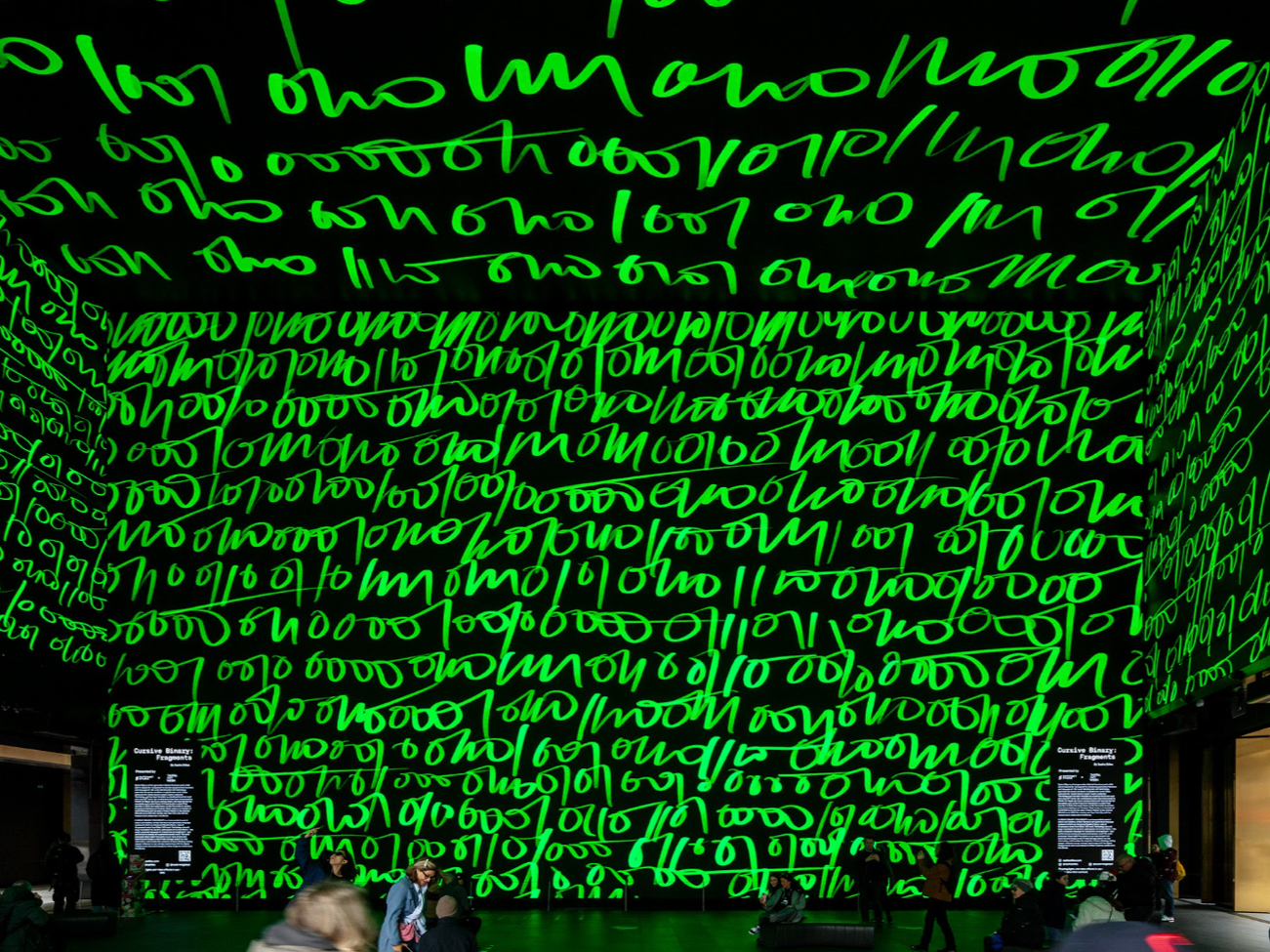
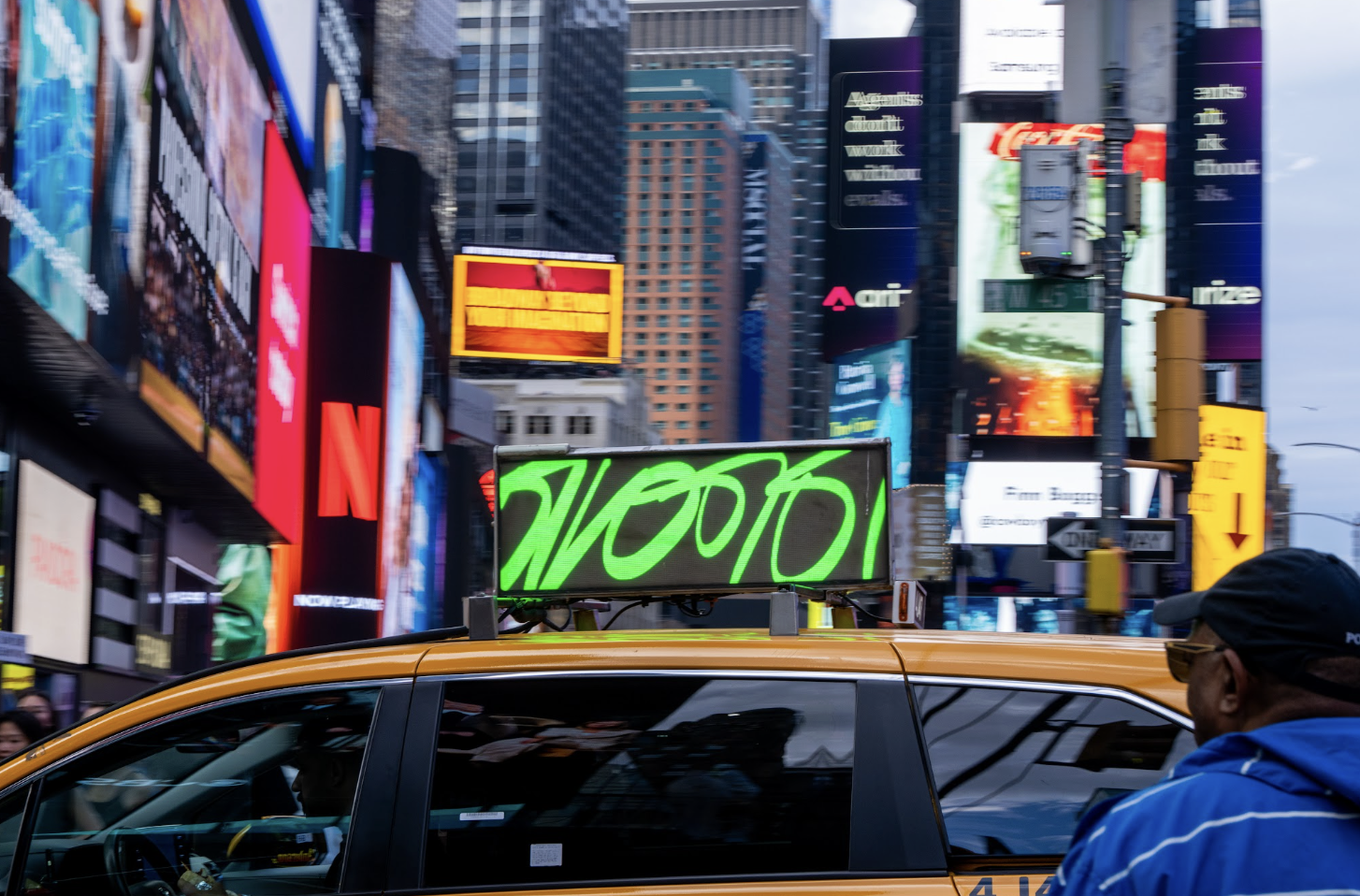
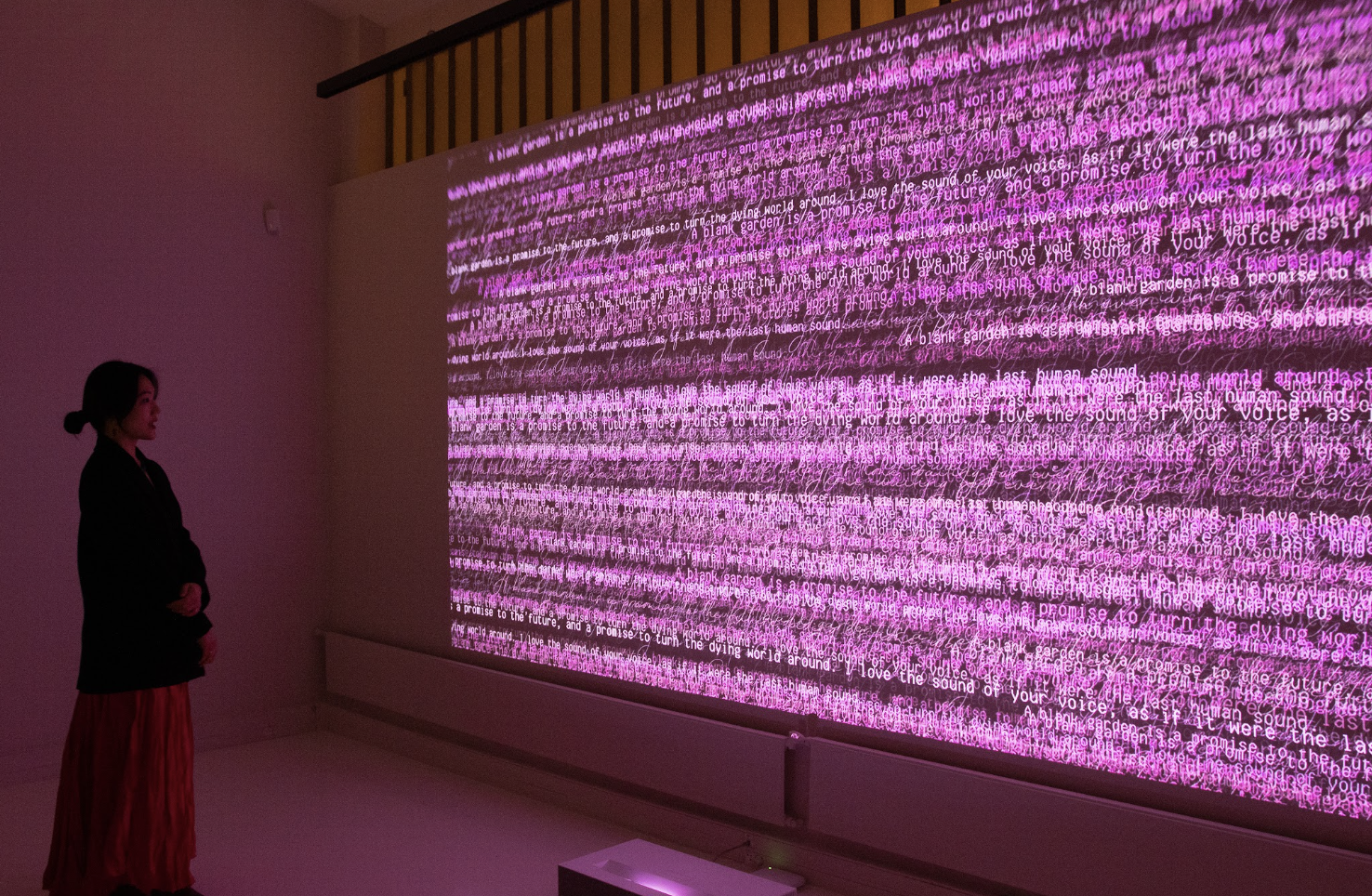
P: Your work exists between traditional literary forms and emerging technologies. How has your background in classical literature and contemporary writing. When did you decide you wanted to become an artist and was there a particular moment when you understood language would become the foundation of your artistic practice?
S: I really don’t think there was a particular moment when I decided to become an artist. I always thought of myself as a writer, and for a long time I assumed that meant publishing poems and making books. But I was also constantly drawn to artists who treated language as material: putting words on buildings, screens, bodies, objects, into sound and public space. And I was equally drawn to poets who didn’t obey the conventions of contemporary poetry. I came to realize that the distinction I had made between writing and art wasn’t particularly useful to me. I just wanted to express myself in ways that felt good and exciting.
And that changed my sense of what a poem could be. Words like “writer” and “literature” felt too narrow, too tied to literacy and inscription. I started thinking less about poetry as a literary form and more as a way of engaging with language: something that could happen on a page, in ink or in Times New Roman, size 12, but could just as easily become an image, an installation, a script, a performance, a public workshop with a humanoid android, a gesture, a sculpture, a piece of code, an interactive dance break, a Spotify album, an artist book, a generative system. My poems have been all of these things.
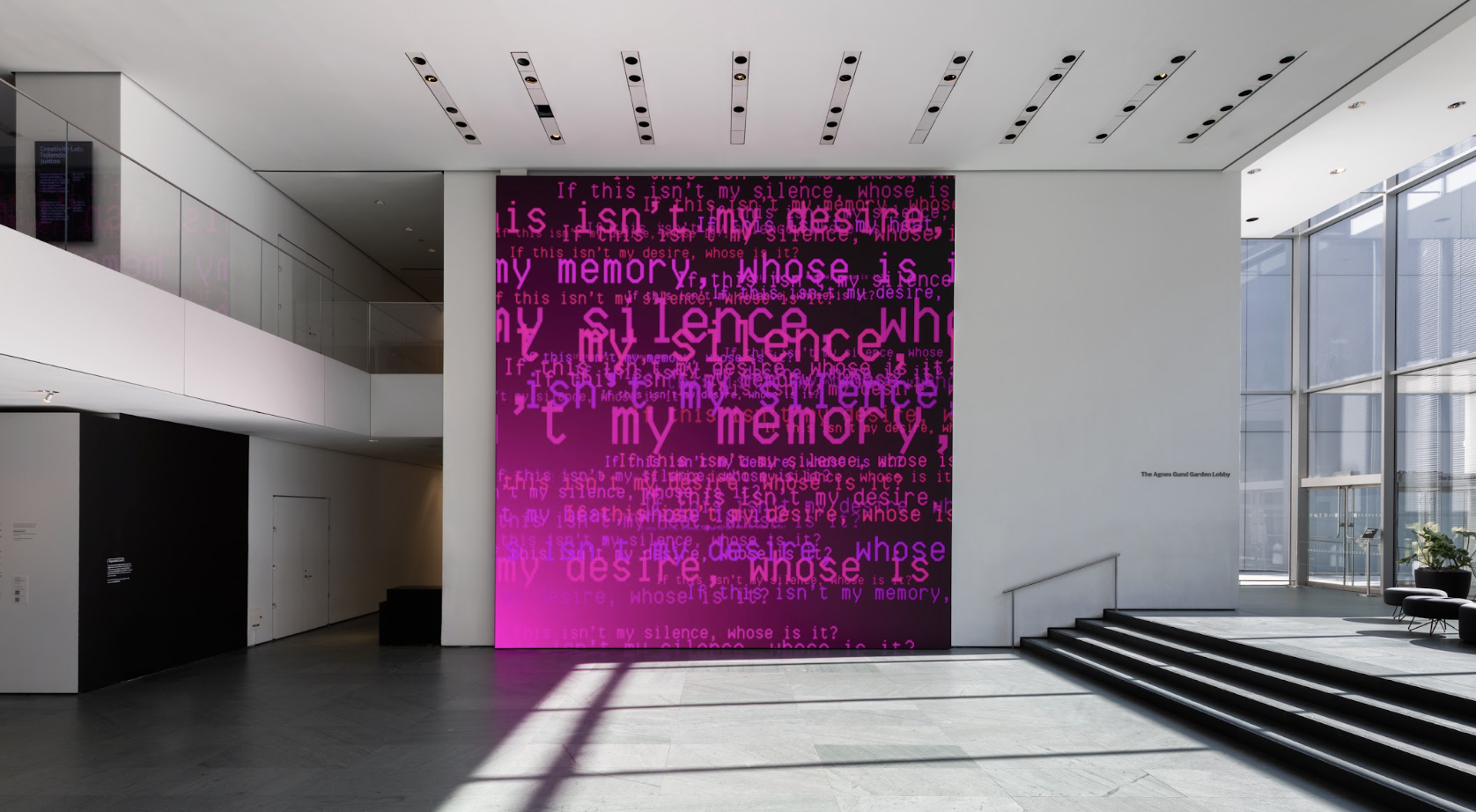
P: You have spoken about encountering the research paper “Attention Is All You Need,” which introduced the transformer architecture, at an early stage. What initially captured your attention about this work, and what did you recognize in this technology that felt significant from a creative or artistic perspective?
S:
“You know, I was recently on a panel where someone said, “So you and, like, two other people recognized the significance of transformer architecture early on?” The implication being that generative AI only really entered public consciousness recently.”
But actually, yes. Of course, I wasn’t a tech insider or a computer engineer or an AI scientist. I read about it as a poet – a poet who’d spent years devouring Ray Kurzweil and Nick Bostrom and Ellen Ullman and Donna Haraway and Wired and Ars Technica. So yes, I sensed that this rather niche technological breakthrough was a profound change in our relationship to language. And I couldn’t understand why, ironically, no one in the worlds of literature and language and poetry seemed to be paying attention.
P: The transformer architecture fundamentally changed how machines process and generate language. As a poet and writer, what aspects of this new approach to language models felt particularly compelling to you?
S: There’s a long history of generative, aleatory, automated, and computational writing, from ancient combinatorial practices to Oulipo and early computer poetry. I’d been a fan of Alison Knowles and her poetic artwork, “The House of Dust,” and I loved the poet Christian Bök’s essays on The Policeman’s Beard Is Half-Constructed, a book of computer-generated poetry and prose from 1984. I saw NLP and transformer-based language models as a new chapter in that unfolding story: rather than moving through language one word at a time, these systems opened up into vast, high-dimensional fields of relationships. They could go beyond working with rules to engaging with patterns learned from language itself. Which felt deeply resonant to how poetry and poetic association works. It felt like an extraordinary new instrument to add to my writer’s toolkit.
P: When you first encountered these ideas, did you immediately understand their potential implications for creative practice, or did that realization unfold over time?
S: I definitely had a sense that something seismic was happening. I felt exhilarated and inspired enough to throw myself into my experiments with an intensity that, quite honestly, flummoxed a lot of the people around me. This was true both in my creative writing and in my longtime professional work as a freelance copywriter and consultant to creative agencies. I’d spent years building brand voices, defining vocabulary, tone, syntax, rhythms, and rules that make a company’s voice recognizably itself – so the idea of customizing or fine-tuning a language model felt weirdly familiar. My brother and I even worked on turning some of my early experiments into an enterprise writing tool. Of course, the learning curve was steep, and we didn’t yet have all the no-code tools and friendly interfaces we do now. And, ultimately, it was the poetry and art of it all that fascinated me.
By 2021, the year my first book Technelegy was published, I’d gotten used to being largely overlooked by the literary world, and had gravitated toward digital art and web3. There, I found myself introducing friends and fellow artists, including my co-founders and community at theVERSEverse, to ideas and approaches that were still quite niche even in those spaces. I was genuinely surprised by how warmly and quickly my work was received and expanded upon. Suddenly I was being invited to give demos and tutorials, workshops and readings and artist talks; at theVERSEverse, we even launched a platform for generative text called GenText. It was surreal to watch things I’d struggled to share a few years earlier suddenly become legible, even “cool,” as a creative field. And the past few years since the launch of ChatGPT have been just bizarre. It’s been totally and utterly uncanny to live through generative AI moving into mainstream consciousness, as its seismic potential and consequences have become impossible to ignore.
P: You have also referenced early AI poets and experiments, including Ross Goodwin’s work exploring machine-generated writing as early as 2015. What did you find compelling about these early creative experiments, and how did they influence your own thinking about AI as a poetic medium?
S: There’s a strange and persistent resonance between computing, AI, and poetry that goes back at least to Christopher Strachey’s love-letter generator in the early 1950s, and that’s really what has fueled my thinking. We tend to consider poetry as a deeply human art form, emotional, intuitive. But for most of its history, poetry has also been governed by pattern, constraint, logic, algorithm – qualities we characterize as technological. And yet I somehow never encountered that understanding of poetry in my literature classes.
So I’m very grateful to have encountered, in my own self-directed wanderings, the work of people like Ross Goodwin, Alison Parrish, and Gwern Branwen, alongside myriad other touchstones, like Matthew Zapruder’s Why Poetry, which discusses Paul Valéry’s conception of the poem as a kind of machine. I think I’m the beneficiary of a very particular constellation of influences, encounters, and experiences that has allowed me to stand at the confluence of AI and poetry, and see how each might provide a framework for understanding the other.
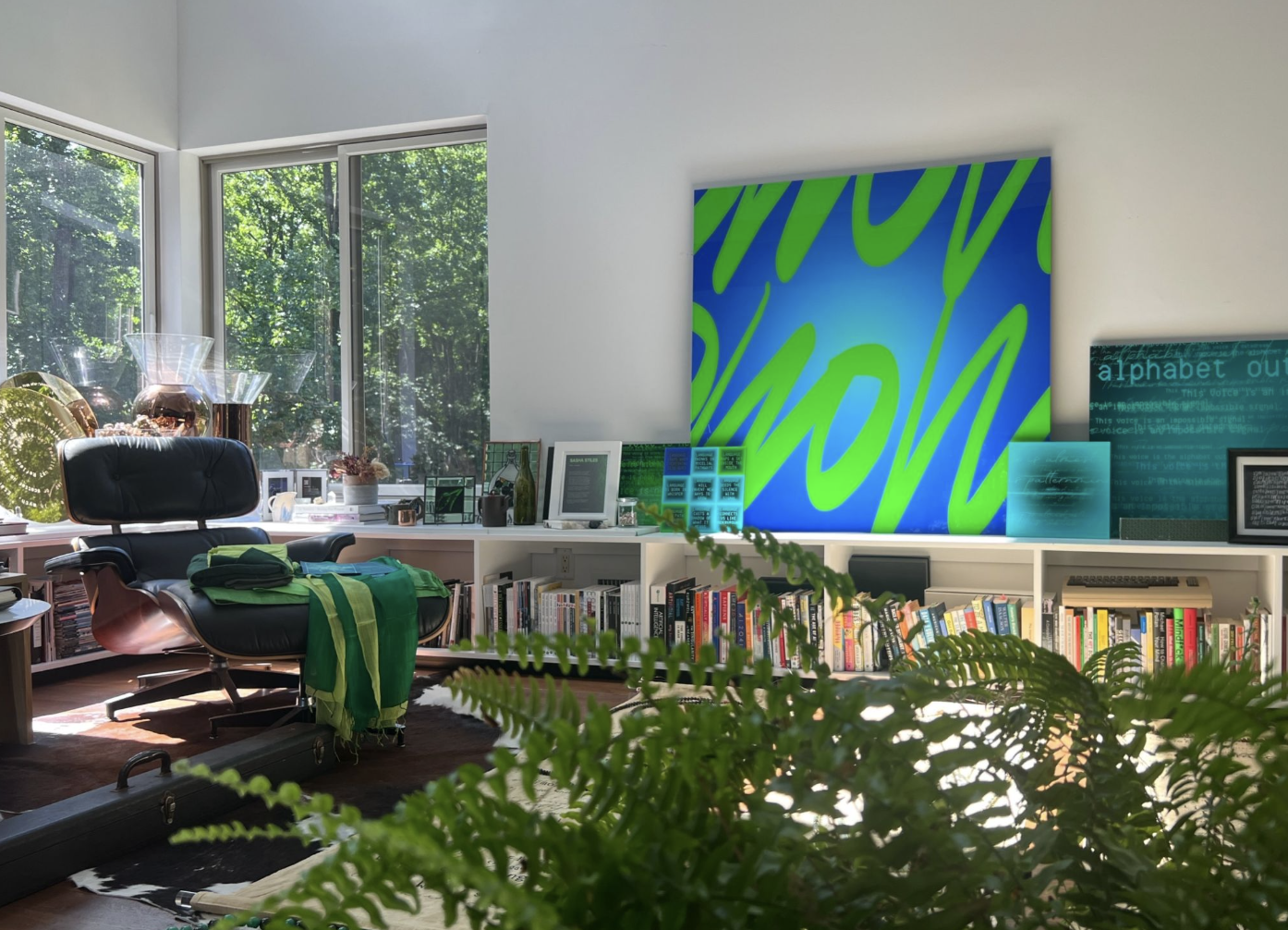
P: You have described yourself as a “technopoet,” a term that reflects your exploration of the relationship between human creativity and machine intelligence. What does this term mean to you, and why was it important to define this space within both contemporary art and literature?
S: “Technopoet” is really just shorthand for the fact that I don’t see poetry and technology as opposing forces. Poetry has always been a technology, an ancient data storage system. I think of the first human poet, Enheduanna, as an innovator and visionary. And I’m interested in what happens when ancient technologies of language encounter emerging ones.
P: Your landmark collection Technelegy (2021), created in dialogue with a personalized AI model, can you speak about the origins of this project and what questions you were exploring through this collaboration?
S: Technelegy began as a compendium of poems I’d been writing about technology since grade school. Around 2015, I started collecting them into a manuscript, which I pitched and pitched with no luck. Some individual poems were published in literary magazines, but I was told more than once that my work was more science fiction than poetry, and that I should focus on humanity, not technology. When I learned about natural language processing and language models, I became obsessed with the idea that I could go beyond writing about technologies like AI and actually make them part of my materials and methods. So I took my manuscript, my original human poetry, and used it to fine-tune first a GPT-2 model and then a GPT-3 model, invoking a kind of transhuman dialogue with myself. The resulting book is a set of AI-powered poems nestled within the human-written poems used to train the models in the first place.
P: The title Technelegy itself combines ideas of technology and elegy, suggesting your interest in the idea of both innovation and reflection through the work. What does this tension between technological possibility and human vulnerability mean to you ? What do you hope to explore or unearth in regards to exploring both in conversation with one another.
S: We tend to polarize technological optimism and dystopian narratives, and I’m not sure how much that really serves us. For me, technology and elegy have always belonged together. Every new technology creates possibilities, but it also changes, displaces, or erases something that came before. Technelegy embodies that tension: wonder and grief, progress and loss, the excitement of becoming something new alongside the question of what we might be leaving behind. What if we had rejected writing because it threatened the traditions of oral memory? What if we had rejected the printing press because it disrupted the authority and intimacy of manuscript culture? Would we be more or less human? That’s not a rhetorical question. Every technology asks us to relinquish something even as it gives us something we couldn’t have imagined before. I want to hold and sit with that complexity rather than choose a side.
P: A Living Poem explores the idea of a work that continues to evolve over time. What interests you about artworks that are not fixed objects, but living systems that can change, adapt, and develop alongside their audiences?
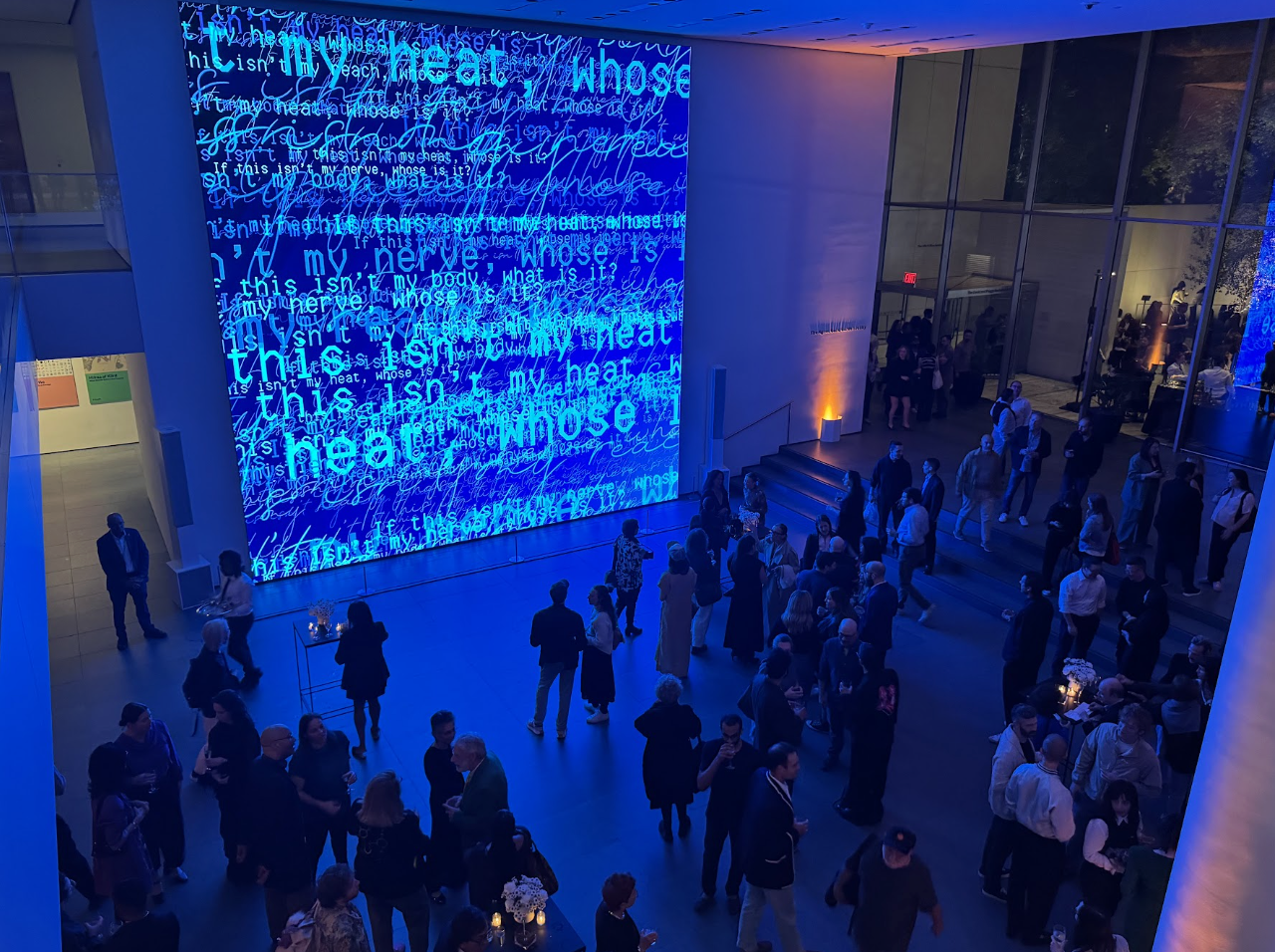
S: I have this working hypothesis that maybe my job isn’t just to write poems, but also to write poets. Part of that comes from the age-old poetic quest to write something “immortal,” something that can outlive and outlast the poet; and what if the thing that lasts isn’t a fixed text, a static artifact, but the poetic mind itself?
It also comes from wondering what kind of poetry belongs to the world we actually live in. I mean, is solipsistic, confessional lyric poetry really an adequate reflection of how it feels to be human here and now? We’re moving away from a twentieth-century culture shaped by broadcast media and mass consumption of authoritative, declarative voices into something radically networked and global — fragmented and fractured, but also collective, a kind of hive mind. An organism with billions of hearts and minds, at war with itself and yet more intimately entangled than ever before. What is that organism’s poetic voice?
As everything we know about being human seems to be shifting under our feet, surely our most quintessentially human form of expression is shifting with it? A LIVING POEM is me fumbling through these questions. And it’s dynamic and endless because my fumbling is far from finished. I created A LIVING POEM as a kind of laboratory or studio for ongoing inquiry, and there’s a lot more work I hope to do in it.
P: Since A Living Poem has been exhibited at MoMA and experienced by such a broad audience, what have been some of the key learnings from seeing the work exist within this institutional context? Were there any unexpected reactions, interpretations, or audience responses that surprised you or changed how you think about the piece or your work more broadly?
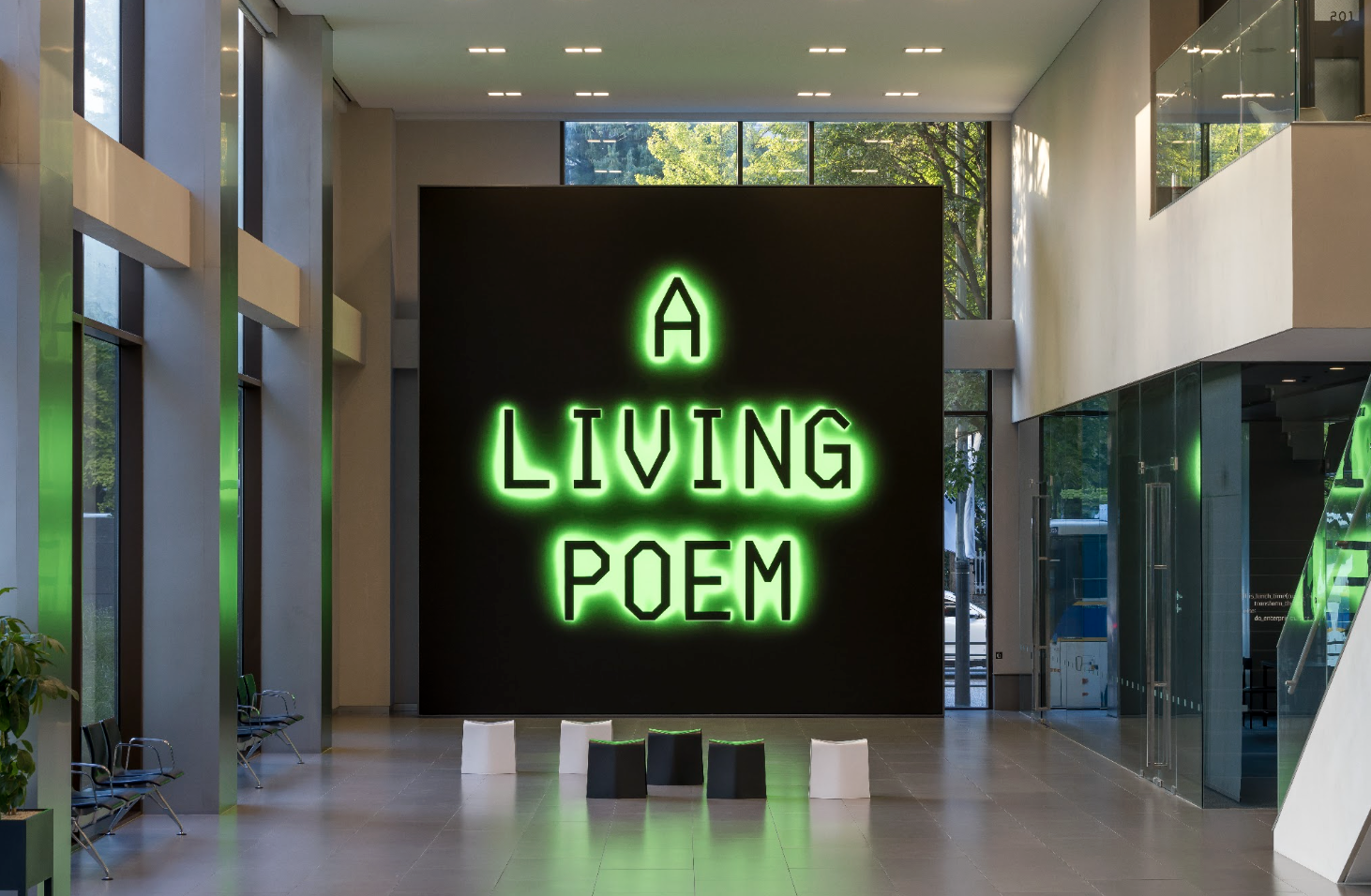
S: From what I observed and heard anecdotally, people often seemed relieved to encounter poetry in such a public, communal space. To find a place for slowness, breath, stillness, contemplation, quiet, reflection. To read together. To process or metabolize at least some of the contemporary madness in the company of strangers. And maybe also to confront the specter of AI without the usual hype, spectacle, or anxiety. So much digital art is frenetic, spectacular, or sci-fi driven, and yet I believe poetry already does, and has always done, so much of what cutting-edge technology purports to do. It is time travel, augmented reality, synthesis, simulation. It collapses distance and lets one consciousness inhabit another. In a world that keeps trying and failing to translate information into wisdom, connection into communion, data into understanding, I feel like we really, really crave poetry.